Categoría: Uncategorized

  • Circuncisión láser: una alternativa moderna para la cirugía del prepucio

    Circuncisión láser: una alternativa moderna para la cirugía del prepucio

    ☎️ Appointments: 9995 14 31 65

    ✉️ Mail: info@prostasur.mx

    Mérida, Yucatán 

    Blog Prostasur

    Urology clinic for men

    Circuncisión láser: una alternativa moderna para la cirugía del prepucio

    La circuncisión es un procedimiento quirúrgico que consiste en retirar parcial o totalmente el prepucio, la piel que cubre el glande del pene. Tradicionalmente se ha realizado con bisturí o técnicas quirúrgicas convencionales; sin embargo, en los últimos años ha surgido una alternativa más moderna: la circuncisión con láser.

    Esta técnica utiliza energía láser para realizar cortes precisos y controlar el sangrado durante el procedimiento, lo que puede ofrecer varias ventajas en comparación con la cirugía tradicional.

    ¿Qué es la circuncisión láser?

    La circuncisión láser es un procedimiento quirúrgico mínimamente invasivo en el que se emplea un dispositivo láser para cortar y retirar el prepucio. El láser emite un haz de energía concentrada que permite cortar el tejido con gran precisión mientras sella pequeños vasos sanguíneos al mismo tiempo.

    Esto reduce el sangrado durante la cirugía y puede favorecer una recuperación más rápida.

    ¿Cuándo se recomienda?

    Aunque la circuncisión también puede realizarse por razones culturales o religiosas, desde el punto de vista médico suele indicarse en las siguientes situaciones:

    1. Fimosis
      Es la incapacidad de retraer el prepucio sobre el glande, lo que puede provocar dolor, dificultad para la higiene o infecciones recurrentes.
    2. Parafimosis
      Ocurre cuando el prepucio queda atrapado detrás del glande y no puede regresar a su posición normal, generando inflamación y dolor.
    3. Balanitis recurrente
      Inflamación frecuente del glande que puede estar asociada a infecciones o mala higiene.
    4. Infecciones urinarias recurrentes
      En algunos casos, especialmente en niños, puede recomendarse la circuncisión para disminuir el riesgo de infecciones.

    ¿Cómo se realiza el procedimiento?

    La circuncisión láser suele realizarse en un entorno ambulatorio y dura aproximadamente entre 20 y 40 minutos.

    El procedimiento generalmente sigue estos pasos:

    1. Anestesia
      Se aplica anestesia local o, en algunos casos, sedación ligera.
    2. Marcaje del área
      El cirujano delimita la cantidad de prepucio que será retirada.
    3. Corte con láser
      El láser realiza el corte con alta precisión mientras coagula los vasos sanguíneos.
    4. Sutura
      Se colocan puntos absorbibles para cerrar la piel.
    5. Colocación de vendaje
      Se protege la zona con un vendaje para favorecer la cicatrización.

    Ventajas de la circuncisión láser

    Entre los beneficios potenciales de esta técnica se encuentran:

    • Menor sangrado durante la cirugía.
    • Mayor precisión en el corte del tejido.
    • Menor inflamación postoperatoria en algunos casos.
    • Recuperación más rápida en comparación con técnicas tradicionales.
    • Menor riesgo de infección, debido al efecto térmico del láser.

    Sin embargo, es importante señalar que los resultados también dependen de la experiencia del cirujano y del cuidado postoperatorio.

    Recuperación después de la cirugía

    La recuperación suele ser relativamente rápida. La mayoría de los pacientes pueden retomar actividades cotidianas ligeras en pocos días.

    Algunas recomendaciones después del procedimiento incluyen:

    • Mantener la zona limpia y seca.
    • Tomar los analgésicos o antiinflamatorios prescritos.
    • Evitar actividad sexual o masturbación durante 3 a 4 semanas.
    • Usar ropa interior cómoda para evitar fricción.

    Es normal experimentar inflamación leve, sensibilidad o pequeñas molestias durante los primeros días.

    Posibles complicaciones

    Aunque la circuncisión láser es generalmente segura, como cualquier procedimiento quirúrgico puede presentar algunas complicaciones, tales como:

    • Sangrado leve
    • Infección
    • Inflamación prolongada
    • Cicatrización irregular

    Estas complicaciones son poco frecuentes cuando el procedimiento es realizado por un especialista capacitado.

    Remember that at Prostasur, a urology clinic, we are here to serve you.

    ☎️ Appointments: 9995 14 31 65

    ✉️ Mail: info@prostasur.mx

    Prostasur

    COFEPRIS 213301202A0698
  • TURP (Transurethral Resection of the Prostate)

    TURP (Transurethral Resection of the Prostate)

    ☎️ Appointments: 9995 14 31 65

    ✉️ Mail: info@prostasur.mx

    Mérida, Yucatán 

    Blog Prostasur

    Urology clinic for men

    TURP (Transurethral Resection of the Prostate)

    TURP, or Transurethral Resection of the Prostate, is one of the most commonly used surgical procedures to treat urinary symptoms caused by prostate enlargement. For many years, it has been considered the gold standard surgical treatment for Benign Prostatic Hyperplasia.

    This procedure is performed through the urethra, without the need for external incisions, making it a minimally invasive surgery compared with traditional open procedures.

    What is TURP?

    TURP is an endoscopic surgery that involves removing small portions of prostate tissue that block the urethra, allowing urine to flow more easily from the bladder to the outside of the body.

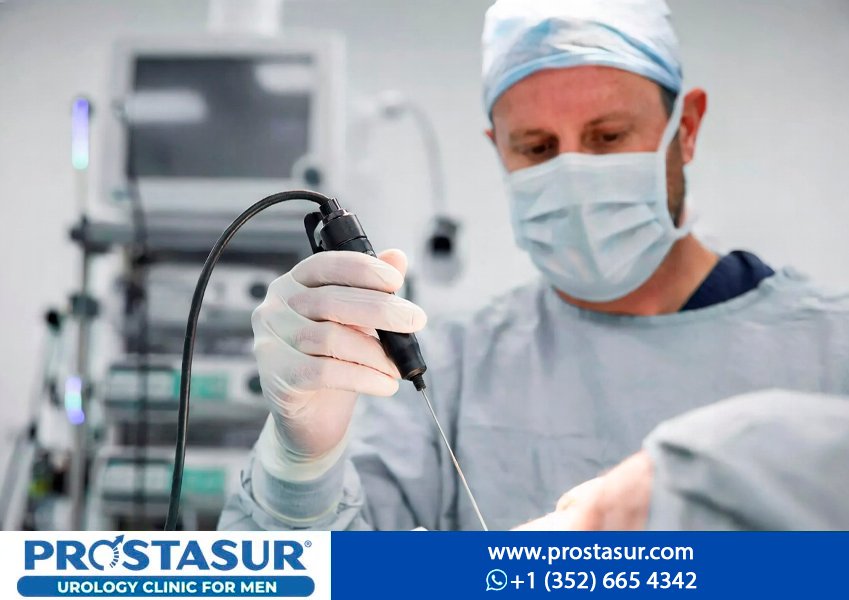
    To perform this procedure, the urologist inserts an instrument called a resectoscope through the urethra. This device contains a small camera and a wire loop that uses electrical energy to cut and coagulate prostate tissue.

    The obstructing tissue is removed gradually until the urinary channel becomes sufficiently open.

    When is TURP recommended?

    TURP is mainly recommended for patients who experience moderate to severe urinary symptoms caused by prostate enlargement.

    Common situations in which this procedure may be recommended include:

    • Difficulty starting urination
    • Weak urinary stream
    • Feeling of incomplete bladder emptying
    • Frequent urination, especially at night
    • Urinary retention
    • Recurrent urinary tract infections
    • Blood in the urine (hematuria)
    • Bladder or kidney damage caused by urinary obstruction

    When medications are no longer effective or symptoms significantly affect the patient’s quality of life, surgery may become the best treatment option.

    How is the surgery performed?

    TURP is usually performed under spinal or general anesthesia and typically lasts 60 to 90 minutes, depending on the size of the prostate.

    The procedure generally includes the following steps:

    1. Insertion of the resectoscope through the urethra
    2. Visualization of the prostate using an endoscopic camera
    3. Gradual resection of obstructing prostate tissue
    4. Coagulation of small blood vessels to control bleeding
    5. Flushing the tissue fragments into the bladder
    6. Placement of a urinary catheter for drainage

    The urinary catheter is usually kept in place for 1 to 3 days after the surgery.

    Recovery after TURP

    After the procedure, the patient usually stays in the hospital for 24 to 72 hours.

    During the first few days, it is normal to experience:

    • Burning during urination
    • Some blood in the urine
    • Increased urinary frequency
    • Urinary urgency

    These symptoms typically improve gradually over the following weeks.

    Full recovery usually takes 3 to 6 weeks, during which patients are advised to:

    • Avoid lifting heavy objects
    • Avoid intense physical activity
    • Drink plenty of water
    • Avoid alcohol and caffeine
    • Refrain from sexual activity for several weeks

    Benefits of TURP

    The main advantages of this procedure include:

    • Significant improvement in urinary flow
    • Reduction of urinary symptoms
    • No external incisions
    • High long-term success rate
    • Extensive clinical experience worldwide

    In most patients, symptoms improve significantly, leading to a substantial improvement in quality of life.

    Possible complications

    Although TURP is a safe procedure, like any surgery it may involve some risks.

    The most common complications include:

    • Bleeding
    • Urinary tract infection
    • Retrograde ejaculation
    • Urethral stricture
    • Urinary incontinence (uncommon)
    • Erectile dysfunction (rare)

    A specific but uncommon complication is TURP syndrome, caused by excessive absorption of the irrigation fluid used during the surgery.

    Alternatives to TURP

    In recent years, several new surgical techniques have emerged as alternatives for some patients, such as:

    • HoLEP
    • Laser prostate enucleation
    • Laser prostate vaporization
    • Open prostate surgery (for very large prostates)

    However, TURP remains one of the most studied, safest, and most effective procedures available.

    Remember that at Prostasur, a urology clinic, we are here to serve you.

    ☎️ Appointments: 9995 14 31 65

    ✉️ Mail: info@prostasur.mx

    Prostasur

    COFEPRIS 213301202A0698
  • HoLEP: Holmium Laser Enucleation of the Prostate

    HoLEP: Holmium Laser Enucleation of the Prostate

    ☎️ Appointments: 9995 14 31 65

    ✉️ Mail: info@prostasur.mx

    Mérida, Yucatán 

    Blog Prostasur

    Urology clinic for men

    HoLEP: Holmium Laser Enucleation of the Prostate

    HoLEP (Holmium Laser Enucleation of the Prostate) is a minimally invasive surgical technique used to treat Benign Prostatic Hyperplasia (BPH), a common condition in older men in which the prostate enlarges and obstructs the normal flow of urine.

    In recent years, HoLEP has become one of the most effective and safest alternatives for treating large prostates, offering results comparable to—or even better than—traditional open surgery, while allowing for a much faster recovery.

    What is HoLEP?

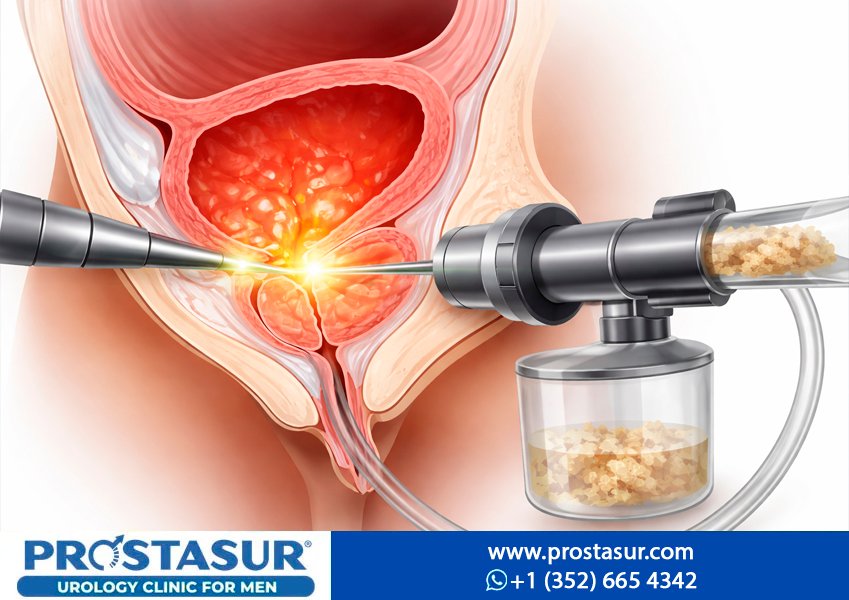
    HoLEP is an endoscopic procedure that uses a holmium laser to separate and remove the prostate tissue that is blocking the urethra.

    Unlike some other surgical procedures, HoLEP does not require external incisions, since the entire procedure is performed through the urethra using an instrument called a resectoscope.

    The procedure involves two main steps:

    1. Enucleation: the laser separates the enlarged prostate tissue from the prostatic capsule.
    2. Morcellation: the detached tissue is fragmented inside the bladder so it can be removed.

    This approach allows surgeons to remove large amounts of tissue with a high degree of precision.

    What is HoLEP used for?

    HoLEP is primarily used to treat urinary symptoms caused by Benign Prostatic Hyperplasia, such as:

    • Difficulty starting urination
    • Weak urinary stream
    • Feeling of incomplete bladder emptying
    • Frequent urination, especially at night (nocturia)
    • Urinary urgency
    • Urinary retention

    When medications are no longer effective, or when the prostate becomes significantly enlarged, surgery is often the best treatment option.

    How is the procedure performed?

    The HoLEP procedure is typically performed under general or spinal anesthesia and usually takes between 60 and 120 minutes, depending on the size of the prostate.

    Steps of the procedure

    1. An endoscope is inserted through the urethra until it reaches the prostate.
    2. The holmium laser is used to separate the enlarged prostate tissue.
    3. The tissue is pushed into the bladder.
    4. A device called a morcellator is used to fragment the tissue.
    5. The fragments are removed through the endoscope.

    After the surgery, a urinary catheter is temporarily placed to allow the bladder to drain.

    Advantages of HoLEP

    HoLEP offers several advantages compared with other prostate procedures.

    1. Effective for large prostates

    Unlike many other techniques, HoLEP can treat prostates of almost any size, including very large ones.

    1. Reduced bleeding

    The laser seals blood vessels while cutting, significantly reducing blood loss.

    1. Faster recovery

    Most patients are able to go home within 24 hours.

    1. Long-lasting results

    The complete removal of obstructive tissue lowers the likelihood of needing additional surgery in the future.

    1. Shorter catheterization time

    In many cases, the catheter can be removed the next day.

    Possible side effects

    As with any surgical procedure, HoLEP may have some side effects, although they are usually temporary.

    The most common include:

    • Burning sensation during urination in the first few days
    • Blood in the urine
    • Temporary urinary urgency
    • Retrograde ejaculation
    • Temporary urinary incontinence

    Serious complications are uncommon.

    Comparison with other prostate surgeries

    HoLEP is often compared with procedures such as:

    • Transurethral Resection of the Prostate (TURP)
    • Open Prostatectomy

    While TURP has long been considered the standard treatment for moderately enlarged prostates, HoLEP has demonstrated equal or superior effectiveness, particularly for large prostates, with less bleeding and a lower likelihood of requiring repeat surgery.

    Recovery after HoLEP

    Recovery is usually quick, but patients are advised to take certain precautions during the first few weeks:

    • Drink plenty of water
    • Avoid heavy lifting
    • Avoid intense physical activity
    • Refrain from sexual activity for 3–4 weeks

    Most patients experience significant improvement in urinary flow and overall quality of life within a few weeks after the procedure.

    Remember that at Prostasur, a urology clinic, we are here to serve you.

    ☎️ Appointments: 9995 14 31 65

    ✉️ Mail: info@prostasur.mx

    Prostasur

    COFEPRIS 213301202A0698
  • Prostate Surgery: When It Is Needed, Types, and Recovery

    Prostate Surgery: When It Is Needed, Types, and Recovery

    ☎️ Appointments: 9995 14 31 65

    ✉️ Mail: info@prostasur.mx

    Mérida, Yucatán 

    Blog Prostasur

    Urology clinic for men

    Prostate Surgery: When It Is Needed, Types, and Recovery

    The prostate is a small gland of the male reproductive system located below the bladder and in front of the rectum. Its main function is to produce part of the seminal fluid that protects and transports sperm. Over time, this gland can develop different problems that, in some cases, require surgical treatment.

    Prostate surgery refers to a group of medical procedures used to treat diseases that affect this gland, especially when medications are no longer effective or when the condition poses a risk to the patient’s health.

    Main Conditions That May Require Surgery

    Several conditions can affect the prostate. The most common include:

    1. Benign Prostatic Hyperplasia (BPH)

    Benign Prostatic Hyperplasia is a noncancerous enlargement of the prostate. It is very common in men over the age of 50.

    As the prostate grows, it can press against the urethra and cause urinary symptoms such as:

    • Difficulty starting urination
    • Weak urinary stream
    • Feeling that the bladder does not empty completely
    • Frequent need to urinate, especially at night

    When these symptoms become severe or do not improve with medication, surgery may be recommended.

    1. Prostate Cancer

    Prostate Cancer is one of the most common cancers in men. In some cases—especially when the tumor is localized—surgery can be one of the main treatment options.

    1. Complicated Prostatitis

    Prostatitis is inflammation of the prostate, usually caused by infection. Although most cases are treated with medication, complicated or chronic situations may require surgical procedures.

    Types of Prostate Surgery

    Depending on the prostate condition, the patient’s age, and the severity of the disease, the doctor may recommend different surgical techniques.

    1. Transurethral Resection of the Prostate (TURP)

    Transurethral Resection of the Prostate is one of the most common surgeries used to treat benign prostatic hyperplasia.

    How is it performed?

    • The surgeon inserts an instrument called a resectoscope through the urethra.
    • No external incisions are required.
    • The prostate tissue blocking the urinary flow is removed.

    Advantages

    • Shorter recovery time
    • No external scars
    • Rapid improvement of urinary symptoms
    1. Radical Prostatectomy

    Radical Prostatectomy involves the complete removal of the prostate gland and, in some cases, surrounding tissues.

    It is mainly used to treat localized prostate cancer.

    It can be performed through:

    • open surgery
    • laparoscopic surgery
    • robot-assisted surgery

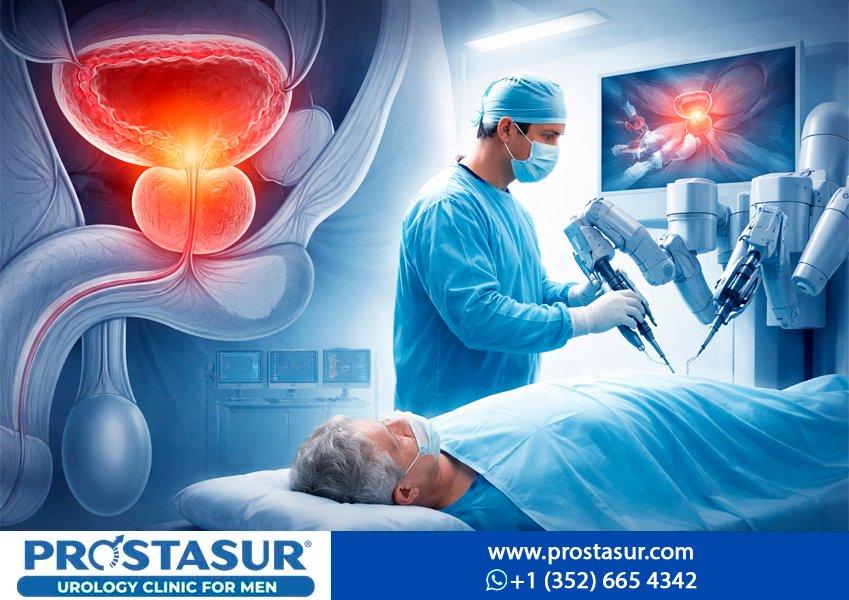
    One of the most advanced techniques is robotic surgery using the da Vinci Surgical System, which allows greater precision and less damage to surrounding tissues.

    1. Laser Prostate Surgery

    This procedure uses laser energy to remove or vaporize prostate tissue that blocks the urethra.

    Some of the best-known techniques include:

    • Laser prostate enucleation
    • Laser prostate vaporization

    Advantages

    • Less bleeding
    • Faster recovery
    • Shorter hospital stay

    Risks and Possible Complications

    Like any surgical procedure, prostate surgery may have some complications, although many are uncommon.

    The most common include:

    • Bleeding
    • Urinary tract infection
    • Temporary urinary incontinence
    • Erectile dysfunction
    • Retrograde ejaculation (semen flows into the bladder instead of exiting through the penis)

    It is important to note that many of these complications depend on the technique used and the surgeon’s experience.

    Recovery After Surgery

    Recovery time may vary depending on the type of surgery performed.

    In general:

    • The patient may stay in the hospital for 1 to 3 days.
    • A urinary catheter is usually placed for a few days to allow healing.
    • Most patients can resume normal activities within 2 to 6 weeks.

    During recovery, doctors usually recommend:

    • Avoid lifting heavy objects
    • Drink plenty of water
    • Avoid straining while urinating or during bowel movements
    • Carefully follow medical instructions

    Importance of Early Diagnosis

    Many men avoid seeing a doctor when they experience urinary symptoms due to embarrassment or because they consider them a normal part of aging. However, early diagnosis can prevent complications and allow for less invasive treatments.

    Men over 50 years old (or earlier if there is a family history) are encouraged to have regular medical checkups to detect prostate problems early.

    Remember that at Prostasur, a urology clinic, we are here to serve you.

    ☎️ Appointments: 9995 14 31 65

    ✉️ Mail: info@prostasur.mx

    Prostasur

    COFEPRIS 213301202A0698
  • Most Common Prostate Symptoms

    Most Common Prostate Symptoms

    ☎️ Appointments: 9995 14 31 65

    ✉️ Mail: info@prostasur.mx

    Mérida, Yucatán 

    Blog Prostasur

    Urology clinic for men

    Most Common Prostate Symptoms

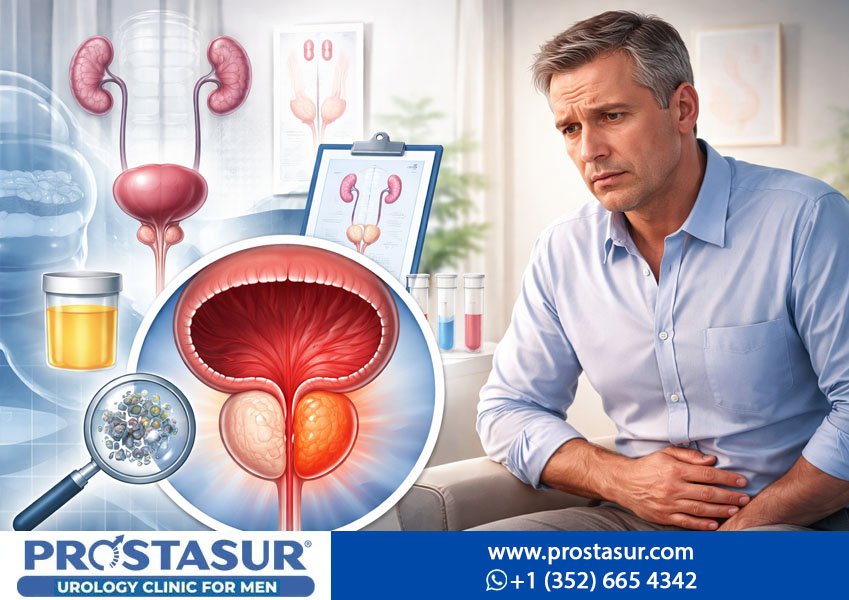
    The prostate is a small gland found only in men, located below the bladder and in front of the rectum. Its main function is to produce part of the seminal fluid. As men age—especially after 40–50 years—the prostate may develop different conditions that cause urinary and general symptoms that should not be ignored.

    Recognizing these symptoms early can make a significant difference in quality of life and in the early detection of diseases.

    1. Difficulty urinating

    One of the most common symptoms. A person may feel that:

    • It is hard to start urinating
    • The urine stream is weak or intermittent
    • Straining is required to urinate

    This happens because the prostate surrounds the urethra and, when it enlarges, it can compress it.

    1. Increased urinary frequency

    It is common to feel the need to urinate:

    • More often during the day
    • Several times during the night (nocturia)

    This can occur even when only small amounts of fluids have been consumed.

    1. Feeling of incomplete bladder emptying

    After urinating, there may be a sensation that the bladder has not fully emptied, causing discomfort and a constant need to return to the bathroom.

    1. Urinary urgency

    A sudden and intense need to urinate that is difficult to control. In some cases, small urine leaks may occur if the bathroom is not reached in time.

    1. Burning or pain during urination

    This may include:

    • A burning sensation
    • Pain in the urethra or lower abdomen

    This symptom is more common when there is prostate inflammation or infection.

    1. Pelvic or lower back pain

    Some men experience pain or discomfort in:

    • The lower abdomen
    • The pelvic region
    • The lower back
    • The perineum (the area between the testicles and the anus)
    1. Changes in ejaculation

    Prostate problems may cause:

    • Pain during ejaculation
    • Reduced semen volume
    • Weak or uncomfortable ejaculation
    1. Blood in urine or semen

    Although uncommon, hematuria (blood in the urine) or blood in the semen is a warning sign that requires immediate medical evaluation.

    1. Recurrent urinary tract infections

    Obstruction of urine flow can lead to urine retention, increasing the risk of repeated infections.

    Important to note

    These symptoms may be related to:

    • Benign prostatic hyperplasia
    • Prostatitis
    • Other prostate conditions

    Not all symptoms indicate cancer, but all of them deserve medical attention.

    When to see a doctor

    Medical evaluation is recommended if:

    • Symptoms persist or worsen
    • They interfere with daily life
    • They appear after the age of 40
    • There is severe pain or the presence of blood

    Early evaluation allows proper treatment and helps prevent complications.

    Remember that at Prostasur, a urology clinic, we are here to serve you.

    ☎️ Appointments: 9995 14 31 65

    ✉️ Mail: info@prostasur.mx

    Prostasur

    COFEPRIS 213301202A0698
  • Why Does the Prostate Grow?

    Why Does the Prostate Grow?

    ☎️ Appointments: 9995 14 31 65

    ✉️ Mail: info@prostasur.mx

    Mérida, Yucatán 

    Blog Prostasur

    Urology clinic for men

    Why Does the Prostate Grow?

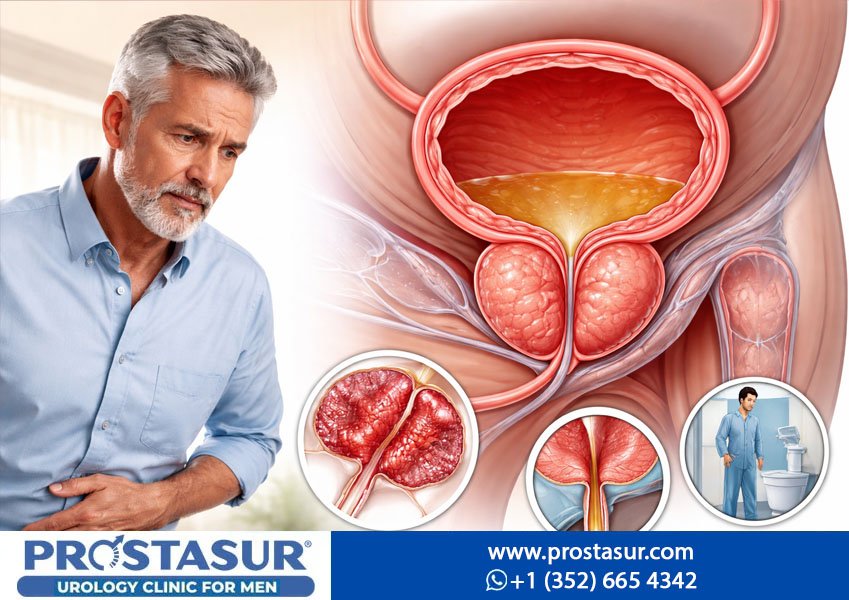
    Prostate growth is a common condition in men, especially after the age of 40 or 50. Although it often causes concern, in most cases it is not related to cancer, but rather to a natural process of male aging. To better understand it, let’s first look at what the prostate is and then explore why it increases in size.

    What Is the Prostate and What Is Its Function?

    The prostate is a gland about the size of a walnut that is part of the male reproductive system. It is located just below the bladder and surrounds the urethra, the tube through which urine and semen pass.

    Its main function is to produce a fluid that forms part of semen, helping to nourish and protect sperm.

    Main Reasons Why the Prostate Grows

    1. Hormonal Changes With Age

    The most common cause of prostate growth is hormonal imbalance that occurs over time.
    Although testosterone levels gradually decrease, the influence of a hormone derived from it, called dihydrotestosterone (DHT), increases. This hormone stimulates the growth of prostate cells.

    This process can lead to what is known as benign prostatic hyperplasia (BPH), a non-cancerous but very common condition.

    1. Natural Aging

    Prostate growth is so closely linked to age that many specialists consider it a normal part of male aging. Statistically:

    • More than 50% of men over the age of 60 have some degree of prostate enlargement.
    • After the age of 80, this percentage exceeds 80%.
    1. Genetic Factors

    If there is a family history of prostate problems, the risk of developing prostate enlargement increases.
    Genetics can influence both the age of onset and the severity of symptoms.

    1. Lifestyle and Habits

    Certain habits can contribute to or worsen prostate growth:

    • Sedentary lifestyle
    • Overweight or obesity
    • Diet high in saturated fats and low in fiber
    • Excessive alcohol consumption
    • Smoking

    Although these factors are not always the direct cause, they do influence the progression of the condition.

    1. Prostate Inflammation (Prostatitis)

    Chronic inflammation of the prostate can cause an increase in its size and urinary symptoms.
    In some cases, repeated or poorly treated infections contribute to prostate enlargement.

    What Symptoms Can Prostate Growth Cause?

    When the prostate increases in size, it can compress the urethra and make it difficult for urine to pass. The most common symptoms include:

    • Difficulty starting urination
    • Weak urine stream
    • Feeling of incomplete bladder emptying
    • Frequent urge to urinate, especially at night
    • Dribbling at the end of urination

    Is Prostate Growth Cancer?

    Not necessarily.
    Benign prostatic hyperplasia and prostate cancer are different conditions, although they can coexist. That is why regular medical checkups are essential, especially from the age of 45–50 onward.

    Remember that at Prostasur, a urology clinic, we are here to serve you.

    ☎️ Appointments: 9995 14 31 65

    ✉️ Mail: info@prostasur.mx

    Prostasur

    COFEPRIS 213301202A0698

  • Love, Pleasure, and Care: What You Should Know About Sexually Transmitted Infections This Valentine’s Day

    Love, Pleasure, and Care: What You Should Know About Sexually Transmitted Infections This Valentine’s Day

    ☎️ Appointments: 9995 14 31 65

    ✉️ Mail: info@prostasur.mx

    Mérida, Yucatán 

    Blog Prostasur

    Urology clinic for men

    Love, Pleasure, and Care: What You Should Know About Sexually Transmitted Infections This Valentine’s Day

    February 14th is usually associated with flowers, romantic dinners, sweet messages, and moments of intimacy. It’s a date that celebrates love in all its forms, but there’s something that is rarely mentioned and that is also a true act of love: taking care of your sexual health.

    Talking about Sexually Transmitted Infections (STIs) shouldn’t be uncomfortable or frightening. On the contrary, information is a tool for protection, trust, and shared responsibility.

    What Are Sexually Transmitted Infections?

    STIs are infections that are mainly transmitted through unprotected sexual contact: vaginal, anal, or oral. They can also be transmitted through contact with blood, from mother to child during pregnancy or childbirth, and in some cases through direct contact with skin lesions.

    The key thing to understand is that anyone can get an STI, regardless of age, gender, sexual orientation, or whether they are in a stable relationship.

    The Most Common STIs

    Some of the most common infections include:

    • Human Papillomavirus (HPV): Very common. Many people have it without knowing it. Some strains cause genital warts, while others are linked to cancer.
    • Chlamydia and gonorrhea: Often asymptomatic, but they can lead to infertility if left untreated.
    • Syphilis: It may start as a mild sore, but without treatment it can damage vital organs.
    • Genital herpes: Causes painful blisters; there is no cure, but treatment can control outbreaks.
    • HIV: Attacks the immune system. Today, with early diagnosis, people can live long and healthy lives.

    The Danger of “Nothing Happened”

    One of the biggest risks surrounding STIs is the false sense of security:

    “I look healthy,”
    “It’s someone I trust,”
    “It only happened once,”
    “Nothing happened.”

    Many STIs do not cause symptoms for months or even years, which makes transmission easier without anyone realizing it. Silence does not protect you; information does.

    Self-Care Is Also a Form of Love

    Taking care of yourself is not a sign of distrust—it’s a sign of self-respect. And taking care of your partner is not unromantic; it’s emotional and physical responsibility.

    Simple actions that make a big difference include:

    • Correct and consistent condom use
    • Regular STI testing, even in stable relationships
    • Open communication with your partner about sexual health
    • Vaccination against HPV and hepatitis B
    • Avoiding sexual contact if there are sores, discharge, or discomfort without medical evaluation

    Conscious Love This Valentine’s Day

    The real act of love is not just the intimate moment, but what you do before and after: staying informed, protecting yourself, and caring for the other person.

    This Valentine’s Day, in addition to giving flowers or chocolates, give yourself something far more valuable:
    health, peace of mind, and shared responsibility.

    Because loving also means preventing.
    Because pleasure and care can coexist.
    Because when you take care of yourself, you are also saying “I love you.”

    Remember that at Prostasur, a urology clinic, we are here to serve you.

    ☎️ Appointments: 9995 14 31 65

    ✉️ Mail: info@prostasur.mx

    Prostasur

    COFEPRIS 213301202A0698
  • Prostate Enlargement: What Every Man Should Know

    Prostate Enlargement: What Every Man Should Know

    ☎️ Appointments: 9995 14 31 65

    ✉️ Mail: info@prostasur.mx

    Mérida, Yucatán 

    Blog Prostasur

    Urology clinic for men

    Prostate Enlargement: What Every Man Should Know

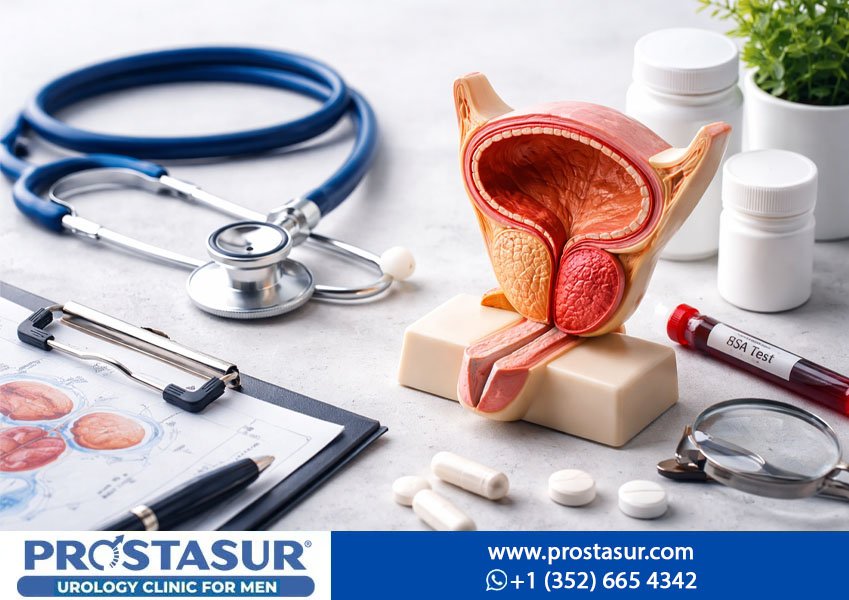
    Prostate enlargement is a common condition in men, especially after the age of 40–50. Although it often causes concern, in most cases it is not cancer, but rather a natural process associated with aging. Understanding what it is, why it happens, and how it can be treated is key to maintaining a good quality of life.

    What Is the Prostate and What Is Its Function?

    The prostate is a gland about the size of a walnut, located below the bladder and in front of the rectum. Its main function is to produce part of the seminal fluid, which helps protect and nourish sperm.

    As men age, the prostate may increase in size and press against the urethra (the tube through which urine passes), leading to various urinary symptoms.

    What Is Prostate Enlargement?

    Prostate enlargement, medically known as benign prostatic hyperplasia (BPH), is a non-cancerous increase in the size of the prostate.
    It is a very common condition:

    • More than 50% of men over the age of 50 have it
    • Up to 80% of men over the age of 70 experience some degree of prostate enlargement

    Main Symptoms

    Symptoms can range from mild to severe and usually develop gradually:

    • Difficulty starting urination
    • Weak or interrupted urine stream
    • Feeling that the bladder does not empty completely
    • Increased urinary frequency, especially at night (nocturia)
    • Urgency to urinate
    • Dribbling after urination

    👉 It is important to note that the severity of symptoms does not always correlate with the size of the prostate.

    Why Does Prostate Enlargement Occur?

    Although the exact cause is not fully understood, it is mainly associated with:

    • Age-related hormonal changes
    • A relative increase in estrogen levels in adult men
    • Genetic factors
    • Sedentary lifestyle
    • Overweight and poor diet

    Diagnosis

    Diagnosis usually includes:

    • Medical history and symptom evaluation
    • Digital rectal examination
    • Blood tests (PSA)
    • Urine tests
    • Prostate ultrasound
    • Urinary flow studies (uroflowmetry)

    Early diagnosis helps prevent complications such as urinary tract infections, urinary retention, or kidney damage.

    Treatment Options

    Treatment depends on the severity of symptoms:

    1. Active Surveillance

    In mild cases, monitoring and lifestyle changes may be sufficient.

    2. Medical Treatment

    • Alpha-blockers (to improve urine flow)
    • 5-alpha reductase inhibitors (to reduce prostate size)

    3. Surgical Treatment

    Recommended when symptoms are severe or complications arise. Both minimally invasive techniques and traditional surgeries are available.

    Lifestyle Changes That Can Help

    • Maintain a healthy weight
    • Engage in regular physical activity
    • Reduce alcohol and caffeine intake
    • Avoid drinking fluids before bedtime
    • Do not delay urination
    • Follow a diet rich in fruits, vegetables, and healthy fats

    When Should You See a Doctor?

    You should consult a specialist if:

    • There is persistent difficulty urinating
    • Recurrent urinary tract infections occur
    • Pain, blood in the urine, or urinary retention is present
    • Symptoms significantly affect quality of life

    Remember that at Prostasur, a urology clinic, we are here to serve you.

    ☎️ Appointments: 9995 14 31 65

    ✉️ Mail: info@prostasur.mx

    Prostasur

    COFEPRIS 213301202A0698