☎️ Appointments: 9995 14 31 65
✉️ Mail: info@prostasur.mx

Mérida, Yucatán
Blog Prostasur
Urology clinic for men
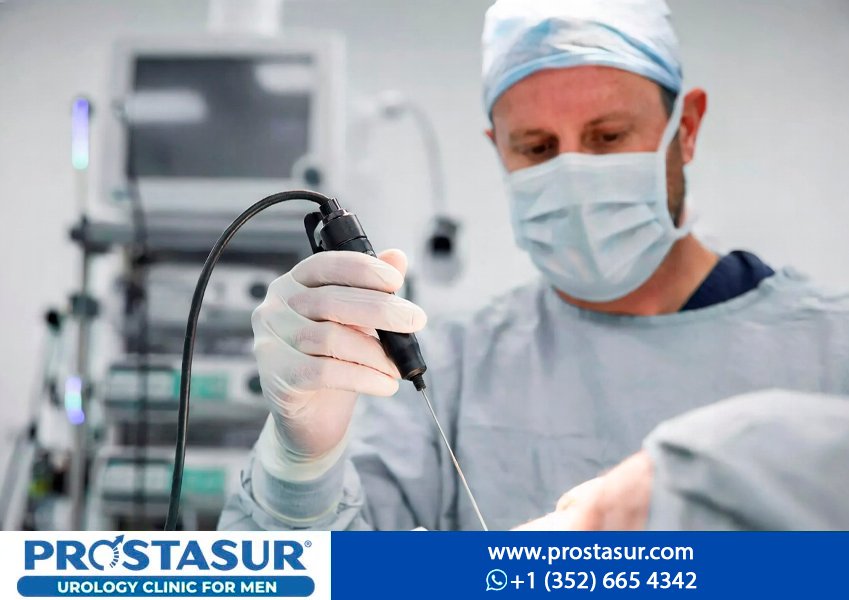
TURP (Transurethral Resection of the Prostate)
TURP, or Transurethral Resection of the Prostate, is one of the most commonly used surgical procedures to treat urinary symptoms caused by prostate enlargement. For many years, it has been considered the gold standard surgical treatment for Benign Prostatic Hyperplasia.
This procedure is performed through the urethra, without the need for external incisions, making it a minimally invasive surgery compared with traditional open procedures.
What is TURP?
TURP is an endoscopic surgery that involves removing small portions of prostate tissue that block the urethra, allowing urine to flow more easily from the bladder to the outside of the body.
To perform this procedure, the urologist inserts an instrument called a resectoscope through the urethra. This device contains a small camera and a wire loop that uses electrical energy to cut and coagulate prostate tissue.
The obstructing tissue is removed gradually until the urinary channel becomes sufficiently open.
When is TURP recommended?
TURP is mainly recommended for patients who experience moderate to severe urinary symptoms caused by prostate enlargement.
Common situations in which this procedure may be recommended include:
- Difficulty starting urination
- Weak urinary stream
- Feeling of incomplete bladder emptying
- Frequent urination, especially at night
- Urinary retention
- Recurrent urinary tract infections
- Blood in the urine (hematuria)
- Bladder or kidney damage caused by urinary obstruction
When medications are no longer effective or symptoms significantly affect the patient’s quality of life, surgery may become the best treatment option.
How is the surgery performed?
TURP is usually performed under spinal or general anesthesia and typically lasts 60 to 90 minutes, depending on the size of the prostate.
The procedure generally includes the following steps:
- Insertion of the resectoscope through the urethra
- Visualization of the prostate using an endoscopic camera
- Gradual resection of obstructing prostate tissue
- Coagulation of small blood vessels to control bleeding
- Flushing the tissue fragments into the bladder
- Placement of a urinary catheter for drainage
The urinary catheter is usually kept in place for 1 to 3 days after the surgery.
Recovery after TURP
After the procedure, the patient usually stays in the hospital for 24 to 72 hours.
During the first few days, it is normal to experience:
- Burning during urination
- Some blood in the urine
- Increased urinary frequency
- Urinary urgency
These symptoms typically improve gradually over the following weeks.
Full recovery usually takes 3 to 6 weeks, during which patients are advised to:
- Avoid lifting heavy objects
- Avoid intense physical activity
- Drink plenty of water
- Avoid alcohol and caffeine
- Refrain from sexual activity for several weeks
Benefits of TURP
The main advantages of this procedure include:
- Significant improvement in urinary flow
- Reduction of urinary symptoms
- No external incisions
- High long-term success rate
- Extensive clinical experience worldwide
In most patients, symptoms improve significantly, leading to a substantial improvement in quality of life.
Possible complications
Although TURP is a safe procedure, like any surgery it may involve some risks.
The most common complications include:
- Bleeding
- Urinary tract infection
- Retrograde ejaculation
- Urethral stricture
- Urinary incontinence (uncommon)
- Erectile dysfunction (rare)
A specific but uncommon complication is TURP syndrome, caused by excessive absorption of the irrigation fluid used during the surgery.
Alternatives to TURP
In recent years, several new surgical techniques have emerged as alternatives for some patients, such as:
- HoLEP
- Laser prostate enucleation
- Laser prostate vaporization
- Open prostate surgery (for very large prostates)
However, TURP remains one of the most studied, safest, and most effective procedures available.
Remember that at Prostasur, a urology clinic, we are here to serve you.
☎️ Appointments: 9995 14 31 65
✉️ Mail: info@prostasur.mx
Prostasur
COFEPRIS 213301202A0698