☎️ Appointments: 9995 14 31 65
✉️ Mail: info@prostasur.mx

Mérida, Yucatán
Blog Prostasur
Urology clinic for men
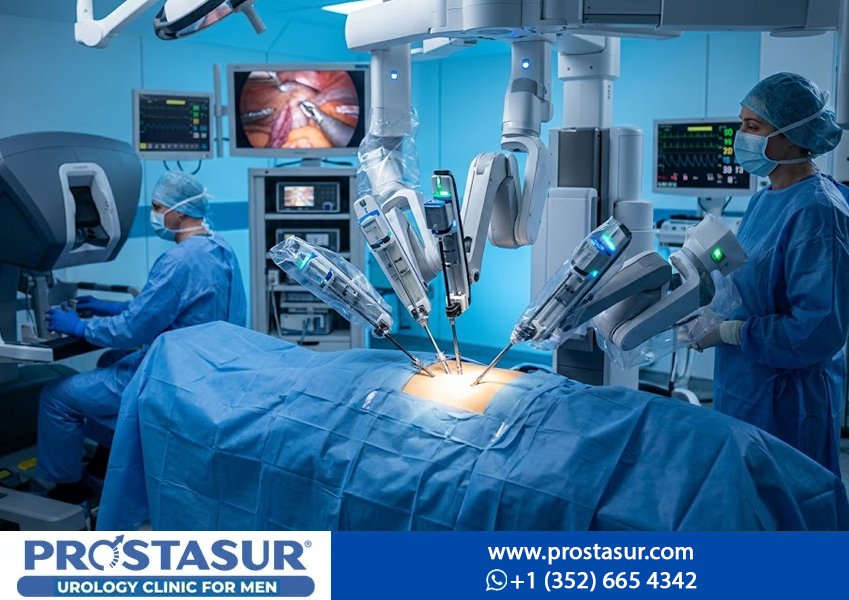
Robotic Surgery: Advanced Technology for More Precise Urological Treatment
Robotic surgery has transformed modern urology by allowing specialists to perform complex procedures with enhanced visualization, precise instrument control, and minimally invasive techniques. This approach can offer important benefits for patients who require surgical treatment for certain urological conditions.
By combining advanced technology with the expertise of a trained surgeon, robotic-assisted surgery can help treat diseases affecting the prostate, kidneys, bladder, and other parts of the urinary system.
What Is Robotic Surgery?
Robotic surgery is a minimally invasive surgical technique in which a surgeon controls specialized robotic instruments from a console. These instruments translate the surgeon’s hand movements into precise actions inside the patient’s body.
A high-definition, three-dimensional camera provides a magnified view of the surgical area, allowing the specialist to visualize anatomical structures in detail.
It is important to understand that the robot does not operate independently. The surgeon controls the instruments throughout the procedure and makes all surgical decisions.
When Is Robotic Surgery Recommended?
Robotic-assisted surgery may be recommended for different urological conditions, depending on the patient’s diagnosis, overall health, and treatment goals.
Some of its most common applications include:
- Prostate cancer: Robotic-assisted radical prostatectomy may be performed to remove the prostate when surgery is an appropriate treatment option.
- Kidney cancer: Certain kidney tumors can be treated with robotic-assisted partial or radical nephrectomy, depending on the characteristics of the tumor.
- Bladder conditions: Selected procedures involving the bladder may be performed using robotic assistance.
- Ureteral disorders: Some reconstructive procedures can be performed robotically to correct obstructions or other structural problems in the urinary tract.
Not every patient is a candidate for robotic surgery. A urologist must evaluate the individual case to determine the most appropriate treatment.
Key Benefits of Robotic Surgery
Robotic-assisted surgery offers several technical advantages that may benefit patients when compared with certain conventional surgical approaches.
- Greater precision
The robotic system allows the surgeon to manipulate specialized instruments with controlled movements, which can be particularly useful when operating in anatomically complex areas.
- Enhanced visualization
A magnified, high-definition, three-dimensional view helps the surgeon identify important anatomical structures during the procedure.
- Smaller incisions
Many robotic procedures are performed through small incisions rather than a large surgical opening. This may reduce tissue trauma and improve postoperative comfort.
- Potentially less blood loss
In selected procedures, robotic-assisted surgery may reduce blood loss compared with open surgery, although outcomes vary according to the operation and the patient’s condition.
- Recovery and hospital stay
Some patients may experience less postoperative pain, a shorter hospital stay, and a faster return to daily activities compared with open surgery. Recovery times vary depending on the procedure and individual circumstances.
- Advanced surgical capabilities
The robotic instruments provide a wide range of motion and allow controlled movements in confined surgical spaces, supporting complex procedures that require delicate tissue handling.
The benefits of robotic surgery depend on the type of procedure, the surgeon’s experience, and the patient’s overall health. Robotic surgery is not automatically superior to every alternative.
How Is Robotic Surgery Performed?
Although the details vary depending on the condition being treated, robotic-assisted surgery generally follows several steps.
- Anesthesia: The patient receives the appropriate anesthesia for the procedure.
- Small incisions: The surgeon makes small incisions to introduce a camera and specialized surgical instruments.
- Robotic system setup: The robotic arms are positioned and connected to the instruments.
- Surgical procedure: The surgeon operates from a console, controlling the instruments while viewing a magnified, three-dimensional image of the surgical field.
- Completion and recovery: Once the procedure is finished, the instruments are removed and the incisions are closed.
The duration of surgery and the length of hospitalization depend on the procedure, the patient’s condition, and the recovery process.
What Is Recovery Like After Robotic Surgery?
Recovery depends on the type of surgery performed, the patient’s general health, and whether complications occur.
Many patients experience temporary discomfort, fatigue, or soreness around the incision sites. The medical team provides instructions regarding pain management, wound care, physical activity, and follow-up appointments.
Depending on the procedure, patients may also require a urinary catheter for a temporary period.
During recovery, it is important to follow the surgeon’s recommendations, avoid strenuous activities until medically cleared, and attend all scheduled follow-up visits.
Fever, severe or worsening pain, difficulty breathing, heavy bleeding, or an inability to urinate when expected requires prompt medical evaluation.
Are There Risks Associated With Robotic Surgery?
Like any surgical procedure, robotic-assisted surgery carries potential risks. These may include bleeding, infection, blood clots, injury to nearby organs, complications related to anesthesia, and the possibility of requiring additional treatment.
The specific risks depend on the procedure being performed and the patient’s medical history.
For example, after surgery for prostate cancer, some patients may experience urinary incontinence or changes in erectile function. The likelihood and duration of these effects vary, and the surgeon should explain them before treatment.
A thorough consultation allows patients to understand the potential benefits, limitations, and risks of the recommended procedure.
Robotic Surgery in Urology: The Importance of Choosing an Experienced Specialist
Robotic technology is an important advancement in modern urology, but successful outcomes depend on more than the equipment alone. The surgeon’s training, experience, and ability to select the right procedure for each patient remain essential.
During a urological consultation, the specialist evaluates the diagnosis, reviews available treatment options, and determines whether robotic-assisted surgery is appropriate.
If you have been diagnosed with a urological condition that may require surgery, consulting an experienced urologist can help you understand your options and make an informed decision.
Remember that at Prostasur, a urology clinic, we are here to serve you.
☎️ Appointments: 9995 14 31 65
✉️ Mail: info@prostasur.mx
Prostasur
COFEPRIS 213301202A0698