☎️ Appointments: 9995 14 31 65
✉️ Mail: info@prostasur.mx

Mérida, Yucatán
Blog Prostasur
Urology clinic for men
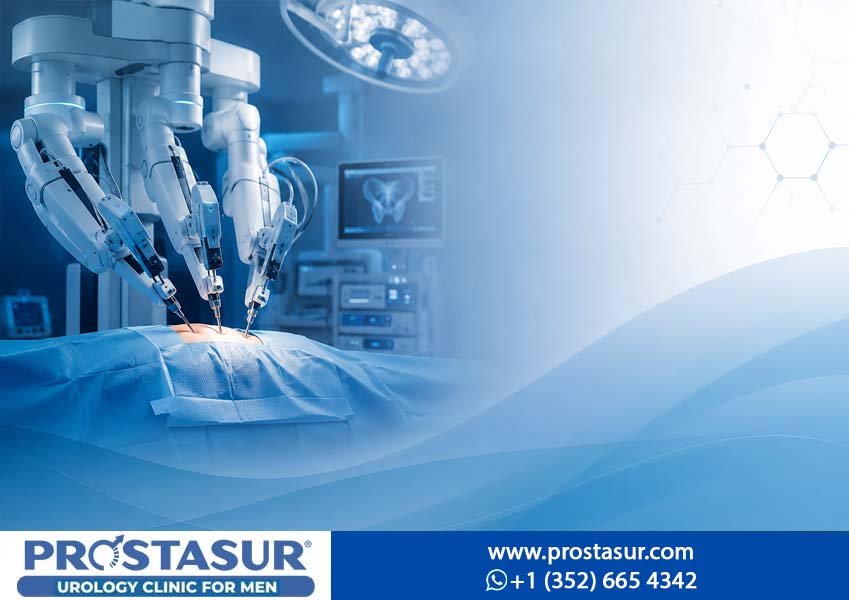
Robotic Prostate Surgery: Precision, Technology, and Faster Recovery
Introduction
Robotic prostate surgery represents one of the most significant advances in modern urology. Thanks to the integration of high-precision technology, three-dimensional vision, and minimally invasive movements, this procedure has revolutionized the treatment of various prostate conditions, especially prostate cancer.
In recent years, robot-assisted surgery has become one of the most widely used techniques worldwide due to its multiple benefits for both patients and surgeons. The millimeter-level precision it provides allows complex procedures to be performed with less damage to surrounding tissues, promoting faster recovery and reducing the risk of complications.
Although many people imagine that the robot performs the surgery on its own, the reality is different. The procedure is always controlled by a highly trained specialist surgeon who directs every movement through a specialized console.
What Is Robotic Prostate Surgery?
Robotic prostate surgery is a minimally invasive procedure performed using a robotic surgical system that allows the physician to operate with much greater precision than traditional surgery.
During the procedure, the surgeon uses a console equipped with special controls that translate the movements of their hands into extremely precise movements of small surgical instruments.
The robotic system offers:
- Three-dimensional high-definition vision.
- Greater surgical precision.
- More delicate movements.
- Less bleeding.
- Smaller incisions.
- Faster recovery.
- Reduced postoperative pain.
Robotic surgery is primarily used to treat:
- Prostate cancer.
- Benign prostatic hyperplasia.
- Certain complex urological conditions.
How Does a Robotic Surgery System Work?
The most well-known robotic system in the world is the Da Vinci system, used in numerous specialized hospitals.
This system consists of three main components:
- Surgeon Console
This is where the specialist fully controls the surgery. From this console, the physician observes enlarged three-dimensional images and directs the surgical instruments.
- Robotic Arms
The robotic arms hold miniaturized instruments capable of performing extremely precise movements that can even surpass the natural capabilities of the human hand.
- Vision Tower
This includes high-definition cameras that provide an enlarged and detailed image of the prostate and surrounding structures.
When Is Robotic Prostate Surgery Recommended?
Robotic surgery is mainly recommended for patients with localized prostate cancer, meaning the tumor has not spread beyond the prostate gland.
It may also be considered in other specific cases depending on medical evaluation.
Some factors influencing the decision include:
- Patient age.
- Overall health condition.
- Tumor size and aggressiveness.
- Biopsy results.
- Imaging studies.
- Patient preferences.
Each case must be individually evaluated by a urology specialist.
Benefits of Robotic Prostate Surgery
One of the main reasons this technique has gained popularity is the large number of benefits it offers compared to conventional open surgery.
Less Bleeding
Thanks to the precision of the instruments and advanced surgical control, bleeding is usually significantly reduced.
Smaller Incisions
The surgery is performed through small abdominal incisions, reducing surgical trauma.
Reduced Postoperative Pain
Because it is less invasive, patients generally experience less pain after the procedure.
Faster Recovery
Many patients can return to their daily activities sooner.
Shorter Hospital Stay
In many cases, hospitalization may be reduced to one or two days.
Greater Precision
Enhanced visualization and precise movements help protect important structures such as nerves and blood vessels.
Better Functional Recovery
Depending on each case, it may promote better recovery of urinary control and sexual function.
How to Prepare for Robotic Prostate Surgery
Before surgery, the patient must undergo several medical evaluations and tests.
These generally include:
- Blood tests.
- Electrocardiogram.
- Imaging studies.
- Anesthesia evaluation.
- General medical assessment.
The physician will also provide specific instructions regarding:
- Preoperative fasting.
- Medications that should be stopped.
- Pre-surgical care.
- Postoperative recommendations.
What Is Recovery Like?
Recovery after robotic surgery is usually faster compared to traditional surgery.
During the first few days, it is normal to experience:
- Mild discomfort.
- Fatigue.
- Moderate swelling.
- Temporary urinary catheter use.
Most patients are able to walk just a few hours after surgery.
As the weeks pass, daily activities can gradually be resumed according to medical instructions.
Possible Risks and Complications
Although robotic surgery is considered safe, no surgical procedure is completely free of risks.
Some possible complications include:
- Bleeding.
- Infection.
- Temporary urinary problems.
- Erectile dysfunction.
- Injury to nearby structures.
- Anesthetic reactions.
The surgeon’s experience and the patient’s condition significantly influence the results.
Can Robotic Surgery Cure Prostate Cancer?
In many cases of localized cancer, robotic surgery can provide excellent oncological outcomes.
However, prognosis depends on multiple factors such as:
- Cancer stage.
- Tumor aggressiveness.
- Patient age.
- Overall health condition.
- Individual response to treatment.
Postoperative medical follow-up is essential to evaluate the patient’s progress.
Myths About Robotic Surgery
“The Robot Operates on Its Own”
False. The robot never makes decisions independently. Every movement is controlled by the surgeon.
“It Is an Experimental Surgery”
No. Robotic surgery has been used for years in highly specialized hospitals around the world.
“It Always Guarantees Better Results”
Although it offers many advantages, results also depend on medical experience and the patient’s specific characteristics.
The Future of Robotic Surgery
Medical technology continues to advance rapidly. Current robotic systems incorporate improved cameras, artificial intelligence, greater precision, and new surgical tools.
In the future, robotic surgery is expected to continue expanding into increasingly complex procedures, offering less invasive treatments and faster recoveries.
Remember that at Prostasur, a urology clinic, we are here to serve you.
☎️ Appointments: 9995 14 31 65
✉️ Mail: info@prostasur.mx
Prostasur
COFEPRIS 213301202A0698