☎️ Appointments: 9995 14 31 65
✉️ Mail: info@prostasur.mx

Mérida, Yucatán
Blog Prostasur
Urology clinic for men
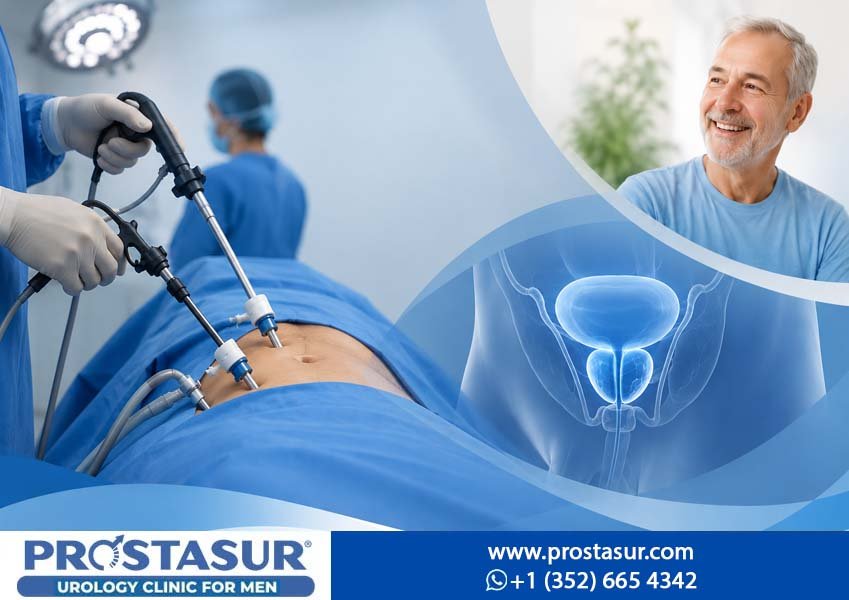
Laparoscopy for Prostate Cancer: A Modern and Minimally Invasive Alternative
Prostate cancer is one of the most common diseases affecting men worldwide. Fortunately, technological advances have made it possible to develop increasingly precise, safe, and minimally invasive treatments. One of these is laparoscopy for prostate cancer, a modern surgical technique that has transformed the way prostate surgery is performed.
What Is Laparoscopy for Prostate Cancer?
Laparoscopy is a minimally invasive surgical procedure that allows surgeons to operate through small incisions in the abdomen using specialized instruments and a high-definition camera called a laparoscope.
In the case of prostate cancer, this procedure is known as a laparoscopic radical prostatectomy, which involves removing the prostate affected by the tumor, along with nearby tissues when necessary.
Unlike traditional open surgery, laparoscopy avoids large incisions, reducing tissue damage and promoting a faster recovery.
When Is It Recommended?
Laparoscopic surgery is usually recommended for patients with localized prostate cancer, meaning the tumor is confined to the prostate and has not spread to other organs.
Before recommending the procedure, the specialist will evaluate several factors, including:
- Patient’s age
- Overall health condition
- PSA levels
- Tumor grade and aggressiveness
- Biopsy and imaging study results
Each case must be evaluated individually to determine the most appropriate treatment.
How Is the Procedure Performed?
During surgery, the patient is placed under general anesthesia. The surgeon makes small incisions through which the camera and surgical instruments are inserted.
Thanks to the magnified and detailed view provided by the laparoscope, the surgeon can work with greater precision around delicate structures such as nerves and blood vessels.
The prostate is then carefully removed, and the connection between the bladder and urethra is reconstructed to restore urinary flow.
The duration of the surgery may vary depending on the patient and the complexity of the case.
Benefits of Laparoscopy
Laparoscopy offers several advantages compared to conventional open surgery:
Less Postoperative Pain
Because the procedure is performed through small incisions, postoperative pain is usually significantly reduced.
Faster Recovery
Many patients are able to return to their daily activities sooner.
Reduced Blood Loss
Surgical precision helps minimize blood loss during the procedure.
Lower Risk of Infection
Smaller wounds decrease the risk of infectious complications.
Better Cosmetic Results
The scars are much smaller and less noticeable.
Recovery After Surgery
After the procedure, patients generally remain hospitalized for one to three days, depending on their recovery progress.
It is common to use a temporary urinary catheter for several days while the urinary connection heals.
During recovery, the physician may recommend:
- Walking progressively
- Avoiding heavy lifting
- Staying well hydrated
- Following a balanced diet
- Attending follow-up appointments
Full recovery may vary from person to person.
Possible Side Effects
Like any surgical procedure, laparoscopic radical prostatectomy may involve certain risks or side effects, including:
- Temporary urinary incontinence
- Erectile dysfunction
- Bleeding
- Infection
- Urinary narrowing or stricture
However, current medical advances and surgical experience have significantly reduced these complications.
Difference Between Laparoscopy and Robotic Surgery
Many people confuse laparoscopy with robotic surgery. Both are minimally invasive techniques, but robotic surgery uses a robotic system controlled by the surgeon, providing even greater precision and mobility.
Even so, conventional laparoscopy remains an excellent therapeutic option with highly favorable oncological outcomes in selected patients.
The Importance of Early Diagnosis
Detecting prostate cancer in its early stages greatly increases the chances of successful treatment and cure. For this reason, regular urological checkups are essential, especially after the age of 45 or 50, or earlier in patients with a family history of the disease.
The most common diagnostic tests include:
- Prostate-specific antigen (PSA) test
- Physical examination
- Magnetic resonance imaging (MRI)
- Prostate biopsy
Remember that at Prostasur, a urology clinic, we are here to serve you.
☎️ Appointments: 9995 14 31 65
✉️ Mail: info@prostasur.mx
Prostasur
COFEPRIS 213301202A0698