☎️ Appointments: 9995 14 31 65
✉️ Mail: info@prostasur.mx

Mérida, Yucatán
Blog Prostasur
Urology clinic for men
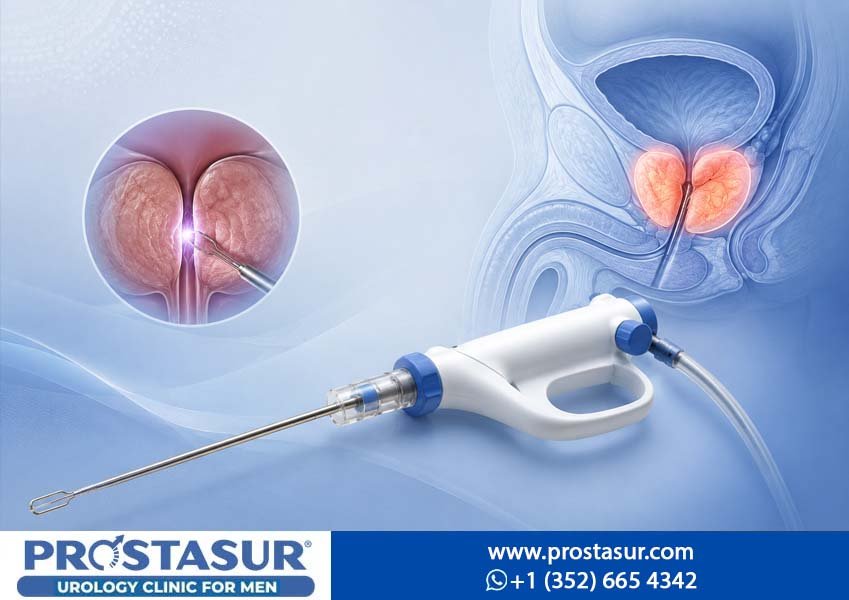
TURP: Surgical Treatment for Prostate Enlargement
Introduction
Benign prostate enlargement, also known as benign prostatic hyperplasia (BPH), is a common condition in men over 50 years of age. As the prostate increases in size, it can compress the urethra and cause different urinary symptoms that affect quality of life.
Among the most commonly used treatments for this condition is TURP (Transurethral Resection of the Prostate), which has been considered for many years the gold standard surgical treatment for benign prostatic hyperplasia.
What is the prostate?
The prostate is a gland of the male reproductive system located below the bladder and surrounding the urethra. Its main function is to produce part of the seminal fluid.
Over time, this gland may naturally enlarge, causing difficulty urinating and other urinary symptoms.
What is benign prostatic hyperplasia?
Benign prostatic hyperplasia (BPH) is a non-cancerous enlargement of the prostate. It is a very common condition associated with aging.
The most common symptoms include:
- Decreased urinary stream strength and caliber.
- Difficulty starting urination.
- Sensation of incomplete bladder emptying.
- Frequent urination.
- Waking up several times at night to urinate.
- Urinary urgency.
- Dribbling after urination.
In more advanced cases, obstruction may lead to urinary tract infections, urinary retention, bladder stones, or kidney damage.
What is TURP?
TURP (Transurethral Resection of the Prostate) is a minimally invasive surgical procedure performed through the urethra without the need for external incisions.
During the surgery, the urologist inserts an instrument called a resectoscope through the penis until reaching the prostate. Using electrical energy, the obstructive prostate tissue is removed to improve urine flow.
The main objective is to improve urination and relieve urinary symptoms.
When is TURP recommended?
TURP is usually recommended for patients who present:
- Moderate to severe urinary symptoms.
- Poor response to medical treatment.
- Urinary retention.
- Recurrent urinary tract infections.
- Urinary bleeding related to the prostate.
- Kidney damage secondary to obstruction.
- Presence of bladder stones.
The decision should always be individualized according to the patient’s age, prostate size, overall health, and quality of life.
How is the procedure performed?
The surgery is generally performed under regional or general anesthesia.
Procedure steps:
- Introduction of the resectoscope through the urethra.
- Direct visualization of the prostate.
- Resection of the obstructive prostate tissue.
- Coagulation of blood vessels to reduce bleeding.
- Temporary placement of a urinary catheter.
The average duration of the procedure usually ranges from 60 to 90 minutes depending on the size of the prostate.
Recovery after TURP
After surgery, the patient usually remains hospitalized for 1 to 3 days.
A urinary catheter is commonly placed during the first hours or days to facilitate urine drainage and prevent obstruction from blood clots.
During recovery, patients may experience:
- Mild burning during urination.
- Blood in the urine.
- Temporary increase in urinary frequency.
- Urinary urgency.
Most patients experience significant improvement in urinary flow within a few weeks after the procedure.
Benefits of TURP
Among the main advantages of TURP are:
- Significant improvement in urinary symptoms.
- Increased urinary flow.
- Reduction of urinary retention.
- Procedure without external incisions.
- Relatively fast recovery.
- Long-lasting results.
Risks and possible complications
Like any surgical procedure, TURP may involve some complications, although many are uncommon.
These may include:
- Bleeding.
- Urinary tract infection.
- Urethral stricture.
- Temporary urinary incontinence.
- Retrograde ejaculation.
- Erectile dysfunction (less common).
- Need for future reintervention.
It is important for the patient to undergo a complete medical evaluation before the procedure.
TURP vs other treatments
Currently, there are other surgical options available for the treatment of prostate enlargement, such as:
- HoLEP (Holmium Laser Enucleation of the Prostate).
- GreenLight laser.
- Aquablation.
- UroLift.
- Open prostatectomy.
However, TURP continues to be a widely used technique because of its effectiveness and the extensive experience accumulated over decades.
Remember that at Prostasur, a urology clinic, we are here to serve you.
☎️ Appointments: 9995 14 31 65
✉️ Mail: info@prostasur.mx
Prostasur
COFEPRIS 213301202A0698